Shui Xian Tea
Narcissus · Shui Hsien
Shui Xian is one of the oldest and most widely grown Wuyi rock teas, named for the narcissus flower it is said to resemble.
Flavor Profile
What does Shui Xian taste like?
Expect Woody · Floral · Mineral — the bars rank each note's relative intensity, strongest first.
Bar length reflects the relative prominence of each flavor note (dominant first), not a laboratory measurement.
Origin
Fujian (Wuyi), China
Shui Xian is grown throughout the Wuyi mountains and is a parent cultivar for many other rock teas.
Where tea cultivation began; home to green, yellow, white, oolong, black, and dark styles across many provinces.
Brewing Guide
How to Brew Shui Xian
Brewing parameters are a starting point and can be adjusted to taste.
Caffeine
Caffeine in Shui Xian
Typical brewed serving
Shui Xian is a medium-caffeine oolong tea. A typical brewed serving contains about 30–50 mg of caffeine.
Values can vary depending on quantity, brewing time, serving size, and preparation method. Range assumes this tea's standard parameters: 3 g leaf to 250 ml water, steeped 1–2 min. Estimates, not lab measurements — see our sources & method.
Fit
Who is Shui Xian for?
New to tea?
A friendly starting point — forgiving to brew and easy to enjoy on the first cup.
When to drink it
Comfortable at any time of day.
Flavor direction
Medium-bodied, leads with woody notes — a oolong tea with woody, floral, mineral character.
Keep Exploring
If you like Shui Xian
Side by Side
Want to see how Shui Xian compares?
Put Shui Xian next to Da Hong Pao and compare flavor, origin, caffeine, and brewing side by side.
The story of Shui Xian
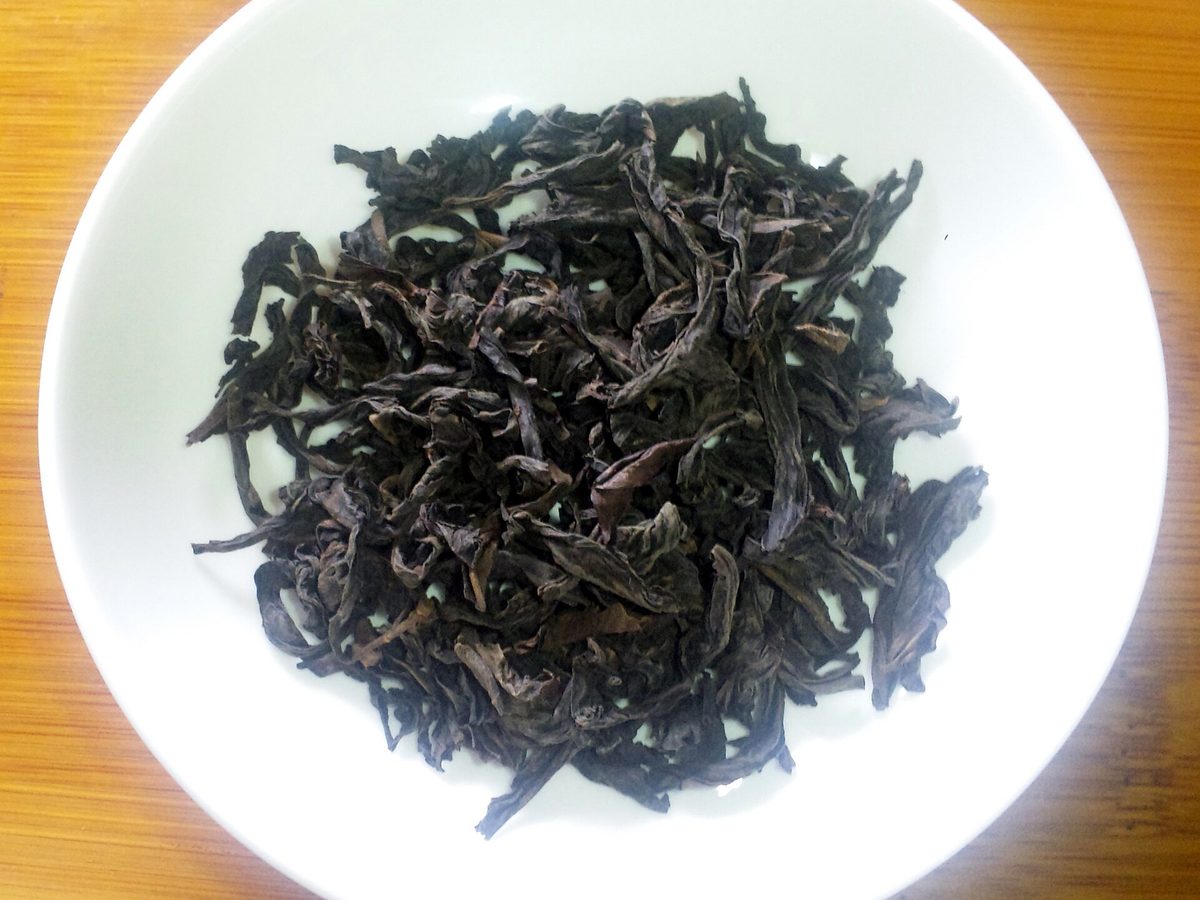
In the Wuyi mountains, Shui Xian is the backbone. It is one of the oldest and most widely grown rock teas, a parent cultivar behind many other yancha, and its character explains why: large dark leaves that brew a cup with a woody, mineral spine, floral orchid notes, and a smooth, lingering sweetness. The name means narcissus, a flower the aroma is said to resemble, and underneath everything runs the structured "yanyun" rock quality that keeps the finish clean rather than heavy.
With medium roast and high oxidation, it sits firmly in the roasted oolong camp without losing its florals. Give it heat: 3 grams in 250 ml at 95–100°C, but keep the steeps short — one to two minutes — and it will reward you across three to six infusions, the roast receding and the mineral-floral core stepping forward as the session goes on. It is a forgiving entry into Wuyi rock tea, less showy than its famous neighbors but arguably the one that teaches you what the region actually tastes like.
FAQ
Shui Xian Tea FAQ
Quick answers about Shui Xian tea, drawn from its flavor, origin, caffeine, and brewing profile.
What is Shui Xian tea?
Shui Xian is a Oolong Tea from Fujian (Wuyi). It is also known as Narcissus and Shui Hsien.
Does Shui Xian tea have caffeine?
Yes. Shui Xian is a medium-caffeine tea, typically 30–50 mg per brewed serving.
What does Shui Xian tea taste like?
Shui Xian is known for a profile led by Woody, Floral, and Mineral, with a medium body.
How do you brew Shui Xian tea?
Use about 3 g of tea per 250 ml of water at 95–100°C, steeping for 1–2 minutes. It can be re-steeped 3–6 times.
Is Shui Xian tea bitter?
Bitterness is not a defining note of Shui Xian; its profile centers on Woody, Floral, and Mineral.