Bai Ji Guan Tea
White Cockscomb · White Rooster Crest
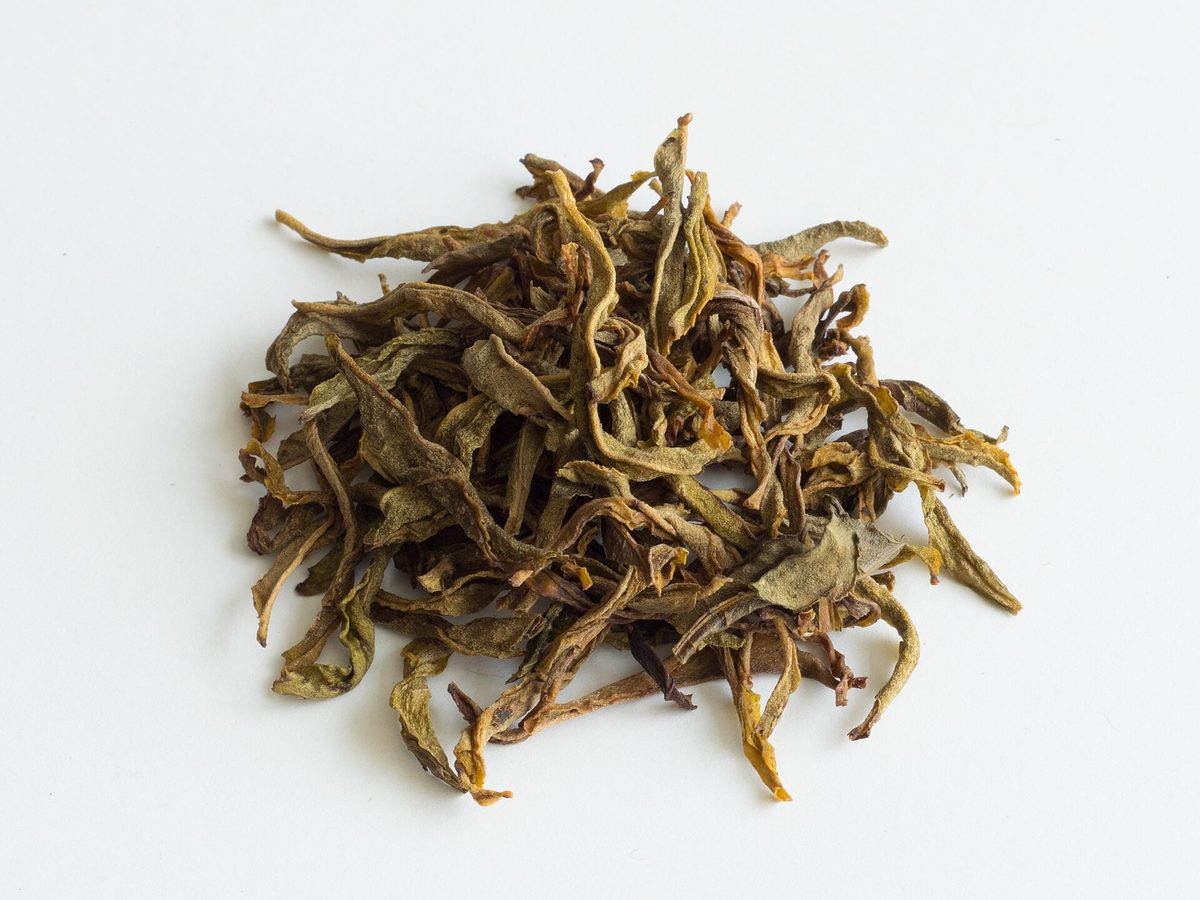
Bai Ji Guan is the rarest of the four famous Wuyi bush teas, named for its pale, yellow-green leaves.
Flavor Profile
What does Bai Ji Guan taste like?
Expect Honeyed · Floral · Citrus — the bars rank each note's relative intensity, strongest first.
Bar length reflects the relative prominence of each flavor note (dominant first), not a laboratory measurement.
Origin
Fujian (Wuyi), China
Bai Ji Guan grows in small quantities on the Wuyi cliffs, and its pale leaves are easy to spot among other yancha bushes.
Where tea cultivation began; home to green, yellow, white, oolong, black, and dark styles across many provinces.
Brewing Guide
How to Brew Bai Ji Guan
Brewing parameters are a starting point and can be adjusted to taste.
Caffeine
Caffeine in Bai Ji Guan
Typical brewed serving
Bai Ji Guan is a medium-caffeine oolong tea. A typical brewed serving contains about 25–45 mg of caffeine.
Values can vary depending on quantity, brewing time, serving size, and preparation method. Range assumes this tea's standard parameters: 3 g leaf to 250 ml water, steeped 1–2 min. Estimates, not lab measurements — see our sources & method.
Fit
Who is Bai Ji Guan for?
New to tea?
A friendly starting point — forgiving to brew and easy to enjoy on the first cup.
When to drink it
Comfortable at any time of day.
Flavor direction
Light-bodied, leads with honeyed notes — a oolong tea with honeyed, floral, citrus character.
Keep Exploring
If you like Bai Ji Guan
Side by Side
Want to see how Bai Ji Guan compares?
Choose any tea and compare flavor, origin, caffeine, and brewing side by side.
The story of Bai Ji Guan
Walk past a row of yancha bushes on the Wuyi cliffs and one plant stops you: pale, yellow-green leaves where every neighbor is dark. That is Bai Ji Guan, the rarest of the four famous Wuyi bush teas, named for leaves said to resemble a white cockerel's crest. Its light look is deceptive. This is a fully oxidized yancha given only a gentle roast, so the cup stays delicate while the structure underneath is unmistakably rock tea.
In the cup it is honeyed and floral, with a soft citrus lift and a silky mineral finish that lingers without weight. The light roast makes it the gentlest entry point among the Wuyi classics — refined rather than imposing. Use about 3 g per 250 ml at 95–100°C, steeping one to two minutes, and expect the leaves to give three to six infusions, each one quieter than the last. Caffeine runs roughly 25–45 mg per cup. Small quantities grow on the cliff slopes, and its pale bushes are easy to spot among the rest.
FAQ
Bai Ji Guan Tea FAQ
Quick answers about Bai Ji Guan tea, drawn from its flavor, origin, caffeine, and brewing profile.
What is Bai Ji Guan tea?
Bai Ji Guan is a Oolong Tea from Fujian (Wuyi). It is also known as White Cockscomb and White Rooster Crest.
Does Bai Ji Guan tea have caffeine?
Yes. Bai Ji Guan is a medium-caffeine tea, typically 25–45 mg per brewed serving.
What does Bai Ji Guan tea taste like?
Bai Ji Guan is known for a profile led by Honeyed, Floral, and Citrus, with a light body.
How do you brew Bai Ji Guan tea?
Use about 3 g of tea per 250 ml of water at 95–100°C, steeping for 1–2 minutes. It can be re-steeped 3–6 times.
Is Bai Ji Guan tea bitter?
Bitterness is not a defining note of Bai Ji Guan; its profile centers on Honeyed, Floral, and Citrus.