Zhuyeqing Tea
Bamboo Leaf Green
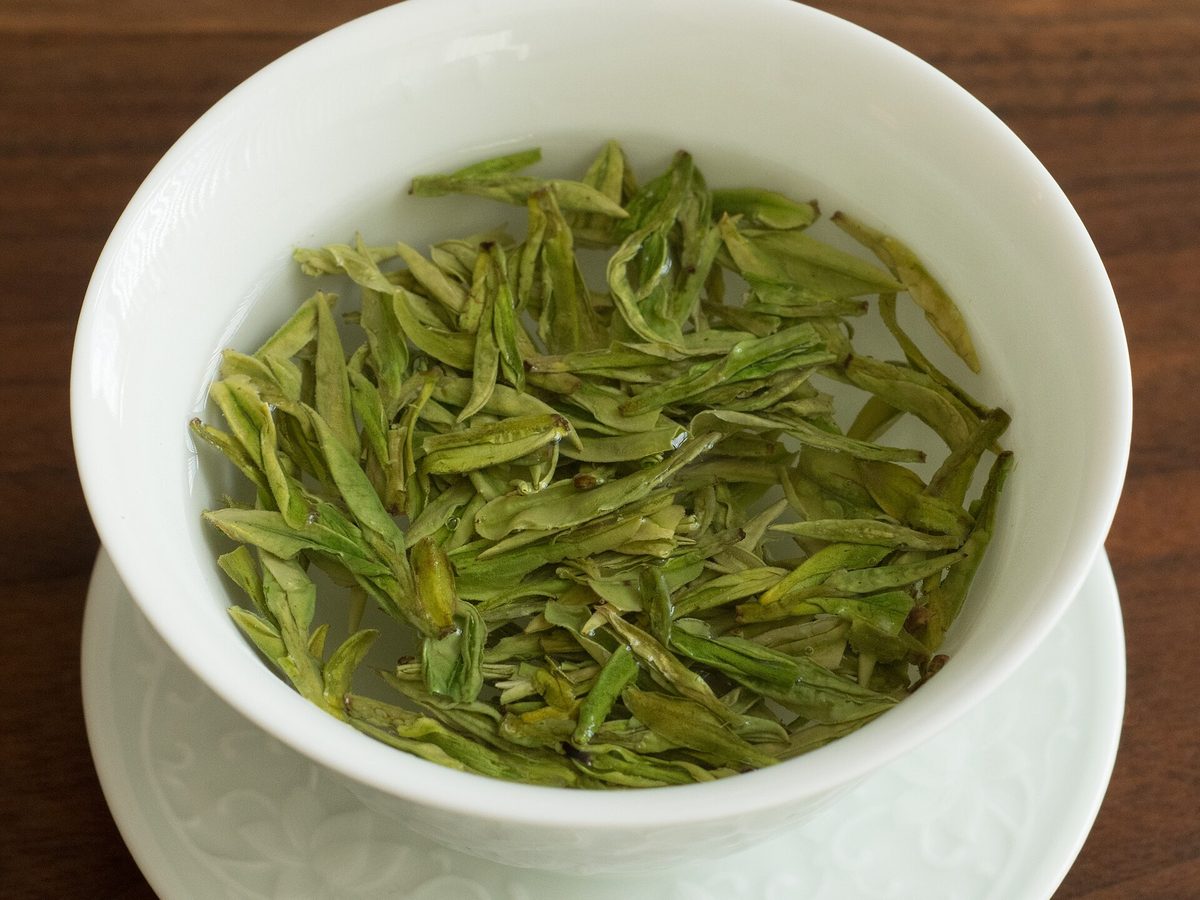
Zhuyeqing, 'bamboo leaf green,' is a modern famous tea from Mount Emei in Sichuan, named for its slender flat leaves.
Flavor Profile
What does Zhuyeqing taste like?
Expect Fresh · Sweet · Floral — the bars rank each note's relative intensity, strongest first.
Bar length reflects the relative prominence of each flavor note (dominant first), not a laboratory measurement.
Origin
Sichuan (Emei), China
Zhuyeqing is grown on Mount Emei in Sichuan and was created in the 1960s.
Where tea cultivation began; home to green, yellow, white, oolong, black, and dark styles across many provinces.
Brewing Guide
How to Brew Zhuyeqing
Brewing parameters are a starting point and can be adjusted to taste.
Caffeine
Caffeine in Zhuyeqing
Typical brewed serving
Zhuyeqing is a medium-caffeine green tea. A typical brewed serving contains about 20–40 mg of caffeine.
Values can vary depending on quantity, brewing time, serving size, and preparation method. Range assumes this tea's standard parameters: 3 g leaf to 250 ml water, steeped 2–3 min. Estimates, not lab measurements — see our sources & method.
Fit
Who is Zhuyeqing for?
New to tea?
A friendly starting point — forgiving to brew and easy to enjoy on the first cup.
When to drink it
Comfortable at any time of day.
Flavor direction
Light-bodied, leads with fresh notes — a green tea with fresh, sweet, floral character.
Keep Exploring
If you like Zhuyeqing
Side by Side
Want to see how Zhuyeqing compares?
Put Zhuyeqing next to Longjing and compare flavor, origin, caffeine, and brewing side by side.
The story of Zhuyeqing
Some teas are brewed in glass for the flavor; Zhuyeqing is brewed in glass for the view. The slender, flat leaves — the name means "bamboo leaf green" — drift upright as they steep, a slow green descent that is half the pleasure of the tea. It is a modern famous tea, created in the 1960s on Mount Emei in Sichuan, proof that a young tea can earn a place beside centuries-old names when the craft is exact.
The cup matches the elegance of the leaf. Pan-fired and lightly pressed, it pours fresh and gently sweet, with a soft floral lift, a silky vegetal body, and a clean finish that leaves no rough edges. Brewing is straightforward: 3 grams per 250 ml, water at 75–85°C, two to three minutes, and two to three infusions. The first steeps lean floral and bright; later ones settle into a rounder, sweeter vegetal tone. It is a friendly tea for newcomers, and a reminder that watching the leaves is not decoration — it tells you when the steep is ready.
FAQ
Zhuyeqing Tea FAQ
Quick answers about Zhuyeqing tea, drawn from its flavor, origin, caffeine, and brewing profile.
What is Zhuyeqing tea?
Zhuyeqing is a Green Tea from Sichuan (Emei). It is also known as Bamboo Leaf Green.
Does Zhuyeqing tea have caffeine?
Yes. Zhuyeqing is a medium-caffeine tea, typically 20–40 mg per brewed serving.
What does Zhuyeqing tea taste like?
Zhuyeqing is known for a profile led by Fresh, Sweet, and Floral, with a light body.
How do you brew Zhuyeqing tea?
Use about 3 g of tea per 250 ml of water at 75–85°C, steeping for 2–3 minutes. It can be re-steeped 2–3 times.
Is Zhuyeqing tea bitter?
Bitterness is not a defining note of Zhuyeqing; its profile centers on Fresh, Sweet, and Floral.