Anji Bai Cha Tea
Anji White Tea
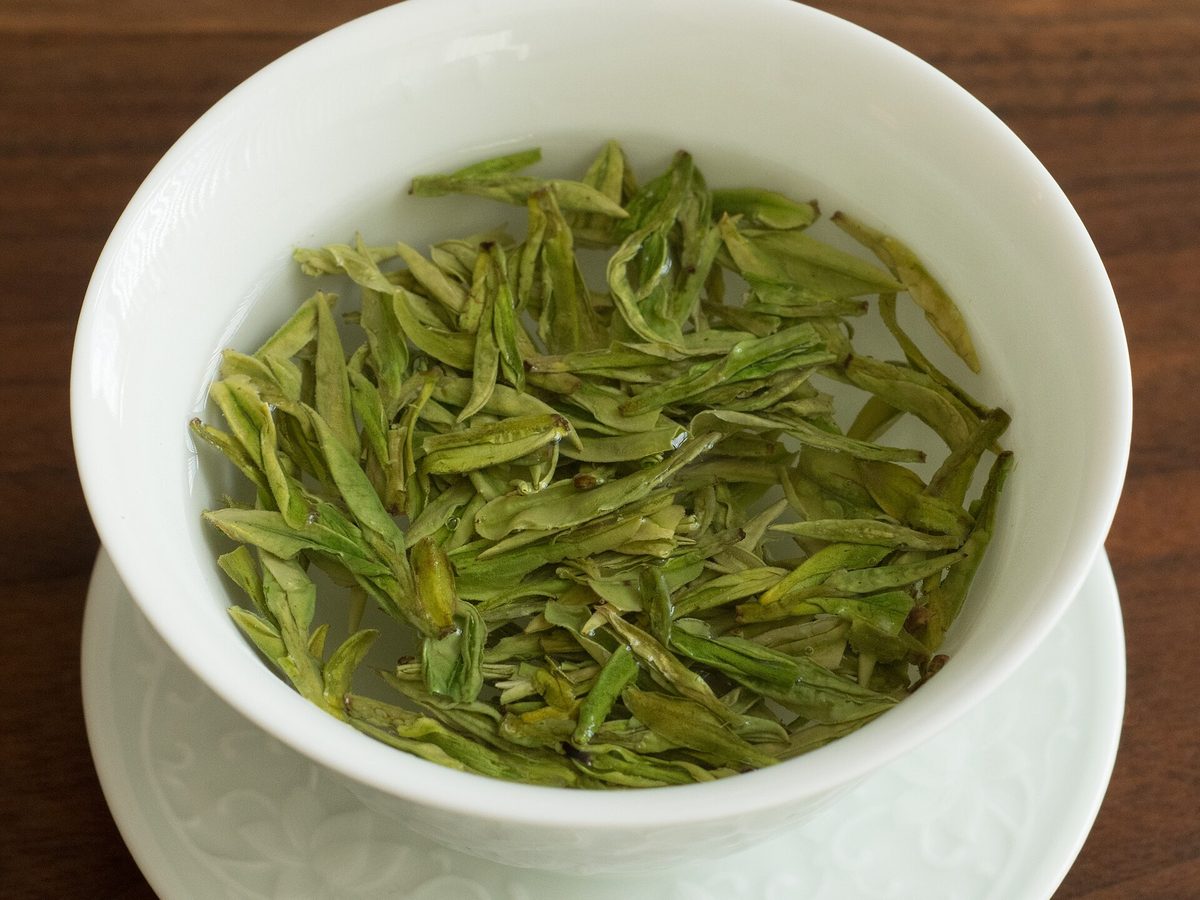
Despite the name, Anji Bai Cha is a green tea made from a rare cultivar whose pale spring leaves give it the 'white' label.
Flavor Profile
What does Anji Bai Cha taste like?
Expect Floral · Fresh · Nutty — the bars rank each note's relative intensity, strongest first.
Bar length reflects the relative prominence of each flavor note (dominant first), not a laboratory measurement.
Origin
Zhejiang, China
Anji county in Zhejiang is the only origin of this cultivar, harvested in a short early-spring window.
Where tea cultivation began; home to green, yellow, white, oolong, black, and dark styles across many provinces.
Brewing Guide
How to Brew Anji Bai Cha
Brewing parameters are a starting point and can be adjusted to taste.
Caffeine
Caffeine in Anji Bai Cha
Typical brewed serving
Anji Bai Cha is a low-caffeine green tea. A typical brewed serving contains about 10–25 mg of caffeine.
Values can vary depending on quantity, brewing time, serving size, and preparation method. Range assumes this tea's standard parameters: 3 g leaf to 250 ml water, steeped 2–3 min. Estimates, not lab measurements — see our sources & method.
Fit
Who is Anji Bai Cha for?
New to tea?
A friendly starting point — forgiving to brew and easy to enjoy on the first cup.
When to drink it
Gentle enough for late afternoons and evenings.
Flavor direction
Light-bodied, leads with floral notes — a green tea with floral, fresh, nutty character.
Keep Exploring
If you like Anji Bai Cha
Side by Side
Want to see how Anji Bai Cha compares?
Put Anji Bai Cha next to Sencha and compare flavor, origin, caffeine, and brewing side by side.
The story of Anji Bai Cha
The name trips people up first: Anji Bai Cha is not a white tea at all. It is a green tea through and through, made in Anji county, Zhejiang, from a rare cultivar whose young spring leaves are so pale they earned the 'white' label centuries before anyone classified teas by processing. Only that one county grows this cultivar, and the picking window is short, which is part of why genuine lots feel special.
In the cup the tea is delicate without being timid. Expect a clear orchid floral note over a mild chestnut sweetness, with almost no bitterness and a silky, light body. The pale-leaf cultivar also keeps caffeine modest — roughly 10 to 25 mg per cup — which is one reason newcomers to green tea tend to get along with it.
Brew it gently: about 3 g of leaves in 250 ml of water at 80–85 °C, steeped for two to three minutes. The leaves will usually give you two or three good infusions. If you have ever found green tea harsh or grassy, this is the one to recalibrate your expectations with.
FAQ
Anji Bai Cha Tea FAQ
Quick answers about Anji Bai Cha tea, drawn from its flavor, origin, caffeine, and brewing profile.
What is Anji Bai Cha tea?
Anji Bai Cha is a Green Tea from Zhejiang. It is also known as Anji White Tea.
Does Anji Bai Cha tea have caffeine?
Yes. Anji Bai Cha is a low-caffeine tea, typically 10–25 mg per brewed serving.
What does Anji Bai Cha tea taste like?
Anji Bai Cha is known for a profile led by Floral, Fresh, and Nutty, with a light body.
How do you brew Anji Bai Cha tea?
Use about 3 g of tea per 250 ml of water at 80–85°C, steeping for 2–3 minutes. It can be re-steeped 2–3 times.
Is Anji Bai Cha tea bitter?
Bitterness is not a defining note of Anji Bai Cha; its profile centers on Floral, Fresh, and Nutty.