Tai Ping Hou Kui Tea
Monkey King Tea · Taiping Houkui
Tai Ping Hou Kui is a showpiece green from Anhui, made of large pressed-flat leaves with a woven grid pattern.
Flavor Profile
What does Tai Ping Hou Kui taste like?
Expect Floral · Vegetal · Mineral — the bars rank each note's relative intensity, strongest first.
Bar length reflects the relative prominence of each flavor note (dominant first), not a laboratory measurement.
Origin
Anhui (Taiping), China
Tai Ping Hou Kui is grown around Taiping county (now Huangshan district) in Anhui.
Where tea cultivation began; home to green, yellow, white, oolong, black, and dark styles across many provinces.
Brewing Guide
How to Brew Tai Ping Hou Kui
Brewing parameters are a starting point and can be adjusted to taste.
Caffeine
Caffeine in Tai Ping Hou Kui
Typical brewed serving
Tai Ping Hou Kui is a medium-caffeine green tea. A typical brewed serving contains about 25–45 mg of caffeine.
Values can vary depending on quantity, brewing time, serving size, and preparation method. Range assumes this tea's standard parameters: 3 g leaf to 250 ml water, steeped 2–3 min. Estimates, not lab measurements — see our sources & method.
Fit
Who is Tai Ping Hou Kui for?
Experienced drinkers
Better once you've explored a few teas — it rewards a little brewing attention.
When to drink it
Comfortable at any time of day.
Flavor direction
Light-bodied, leads with floral notes — a green tea with floral, vegetal, mineral character.
Keep Exploring
If you like Tai Ping Hou Kui
Side by Side
Want to see how Tai Ping Hou Kui compares?
Put Tai Ping Hou Kui next to Longjing and compare flavor, origin, caffeine, and brewing side by side.
The story of Tai Ping Hou Kui
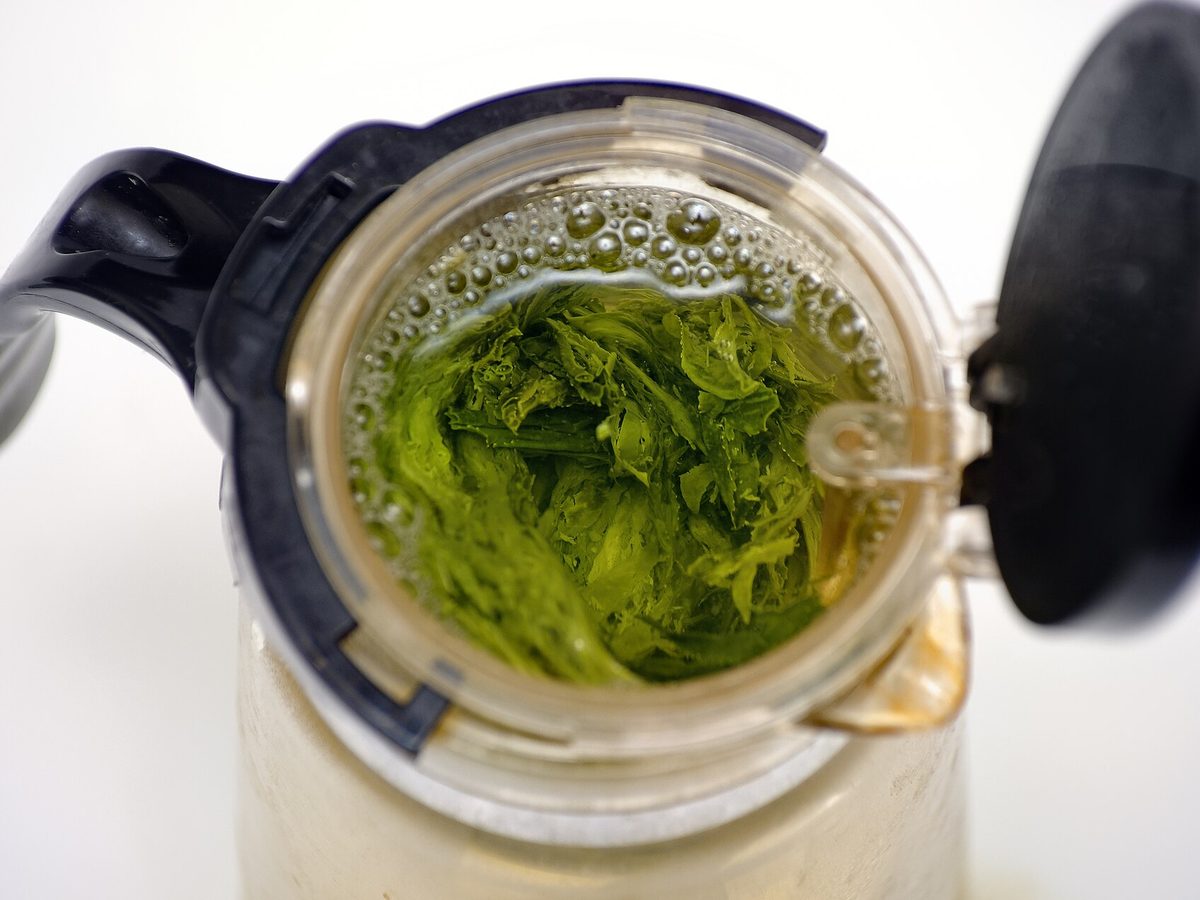
Few teas announce themselves before the water even hits. Tai Ping Hou Kui does: the leaves are unusually large, pressed dead flat, and carry a faint woven grid pattern left by the cloth layers they are traditionally pressed between. That cloth-shaping step is not cosmetic — it forms the broad silhouette and drives the distinctive aroma. Grown around Taiping county in Anhui's Huangshan district, it is also called Monkey King tea, a showpiece name for a showpiece leaf.
The cup confounds expectations set by the leaf's size. Instead of strength, you get orchid florals over soft vegetal notes, resolving into a clean mineral finish with very little bitterness. It asks for a light hand: 3 grams per 250 ml, water at 75–85°C, two to three minutes, and two to three infusions. Because the leaves are so big, give them room to expand — a tall glass or a wide pot works better than a cramped basket. It is not the most beginner-friendly green, but treated patiently it repays the attention with one of Anhui's gentlest, most perfumed cups.
FAQ
Tai Ping Hou Kui Tea FAQ
Quick answers about Tai Ping Hou Kui tea, drawn from its flavor, origin, caffeine, and brewing profile.
What is Tai Ping Hou Kui tea?
Tai Ping Hou Kui is a Green Tea from Anhui (Taiping). It is also known as Monkey King Tea and Taiping Houkui.
Does Tai Ping Hou Kui tea have caffeine?
Yes. Tai Ping Hou Kui is a medium-caffeine tea, typically 25–45 mg per brewed serving.
What does Tai Ping Hou Kui tea taste like?
Tai Ping Hou Kui is known for a profile led by Floral, Vegetal, and Mineral, with a light body.
How do you brew Tai Ping Hou Kui tea?
Use about 3 g of tea per 250 ml of water at 75–85°C, steeping for 2–3 minutes. It can be re-steeped 2–3 times.
Is Tai Ping Hou Kui tea bitter?
Bitterness is not a defining note of Tai Ping Hou Kui; its profile centers on Floral, Vegetal, and Mineral.